
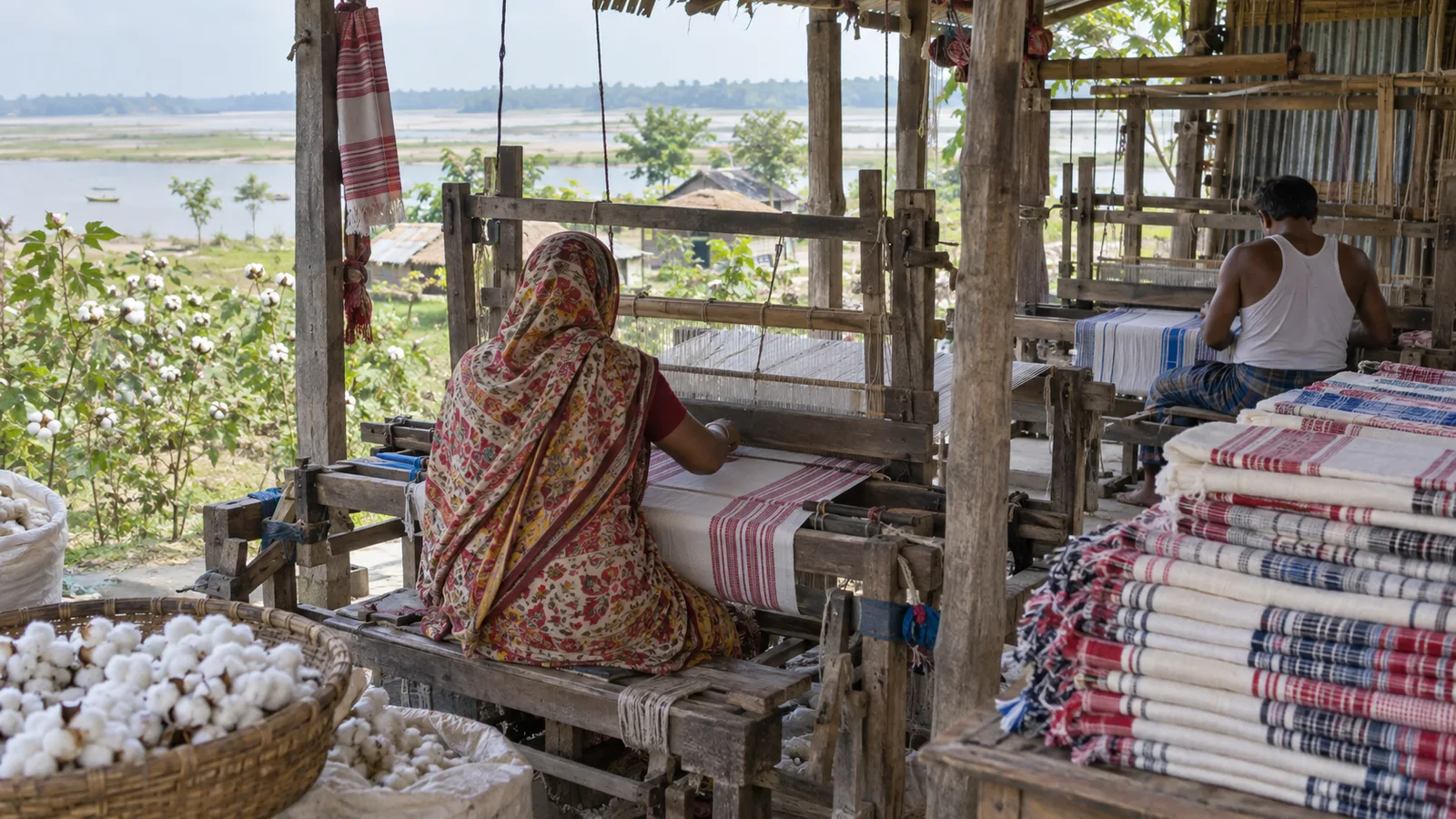
Several thousand household looms operate across the Brahmaputra chars, including Shaheber Alga in Ulipur. They mainly produce gamcha, shawls and everyday fabric, but yarn is brought in from outside markets, leaving weavers exposed to price and supply shocks.
Growing cotton locally could connect farming directly with textile production. Cotton can be stored, its seed can produce oil and feed, and its fibre can be spun and woven locally. That could support both farm income and home-based employment for women.
Weavers generally use processed cotton yarn ranging from five to thirty count. Delayed supply and artificial shortages disrupt production. Although the Cotton Development Board can support seed, fertiliser and procurement, local advisory access remains limited for remote char farmers.
Pilot cotton cultivation, small-scale ginning and spinning, natural-dye training and better market links could help create a resilient local value chain in Ulipur.
This feature was independently rewritten from ideas and facts published by Prothom Alo on 20 April 2026.

Comments